They failed a mock inspection. It could have closed the business.
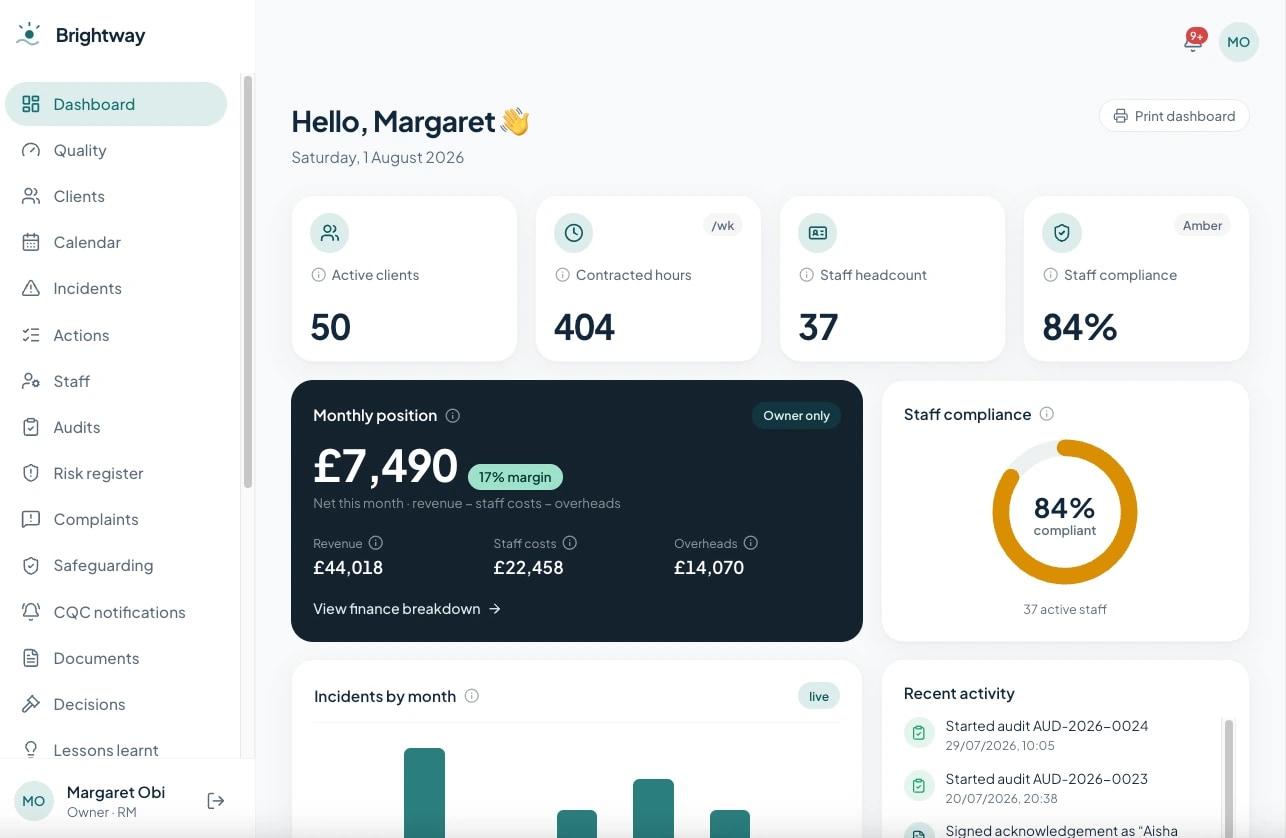
A demo build of the system. The name and data shown are placeholders, to protect client privacy.
The business
Domiciliary care and supported living. UK-based, 50+ staff, turning over about £1.2M a year (roughly $1.5M).
The owner had bought the business a year earlier and grown it hard, from around £180k a year to £1.2M, and from ten staff to fifty. What hadn't grown with it was the way the business ran.
What was happening
They had good tools. Care planning software, HR software, the right things for a provider that size. What they didn't have was anywhere that produced the audit trail their regulator required. Evidence sat in spreadsheets nobody filled in consistently, in email threads, in Word documents, and mostly in the owner's head.
They were probably compliant. They just couldn't prove it. In a regulated sector those are the same thing.
What I found
They thought they had a paperwork problem. They had a structural one.
Almost everyone treats compliance as something you prepare for, sitting beside the real work. It isn't. It's the foundation the operation is built on. That single assumption was causing a scramble before every check and no confidence in between.
What I built
One internal system where compliance evidence is produced by the daily work instead of reconstructed afterwards. Client records, staff credentialing, incidents, risk register, audits, safeguarding, complaints, regulatory notifications, and an inspection-ready pack that assembles evidence on demand.
It replaced the spreadsheets, the Word documents and the email trail. Three months to build, then training, then a month embedding it.
What changed
Inspection-ready every day instead of the week before.
And the owner could finally see the state of her own business without asking anyone.
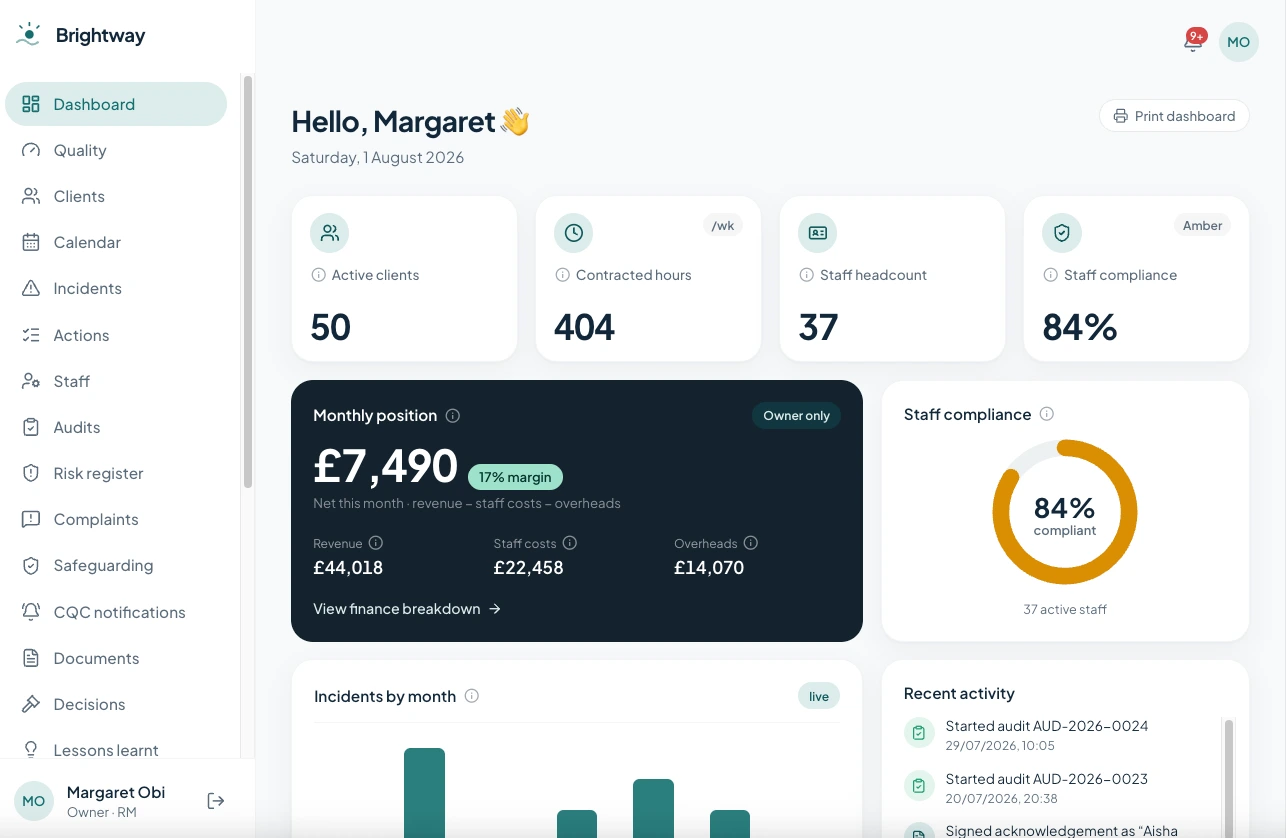
Silent walkthrough of the compliance system.
This client operates under UK care regulation. The specific compliance model differs by market. The operational problem doesn't.
Your business, running without you
If any of this sounds familiar, the first call is free. Thirty minutes, no pitch, and you'll leave with recommendations whether we work together or not.